A brief history of Fairfield through the lens of Hawthorn Farm.
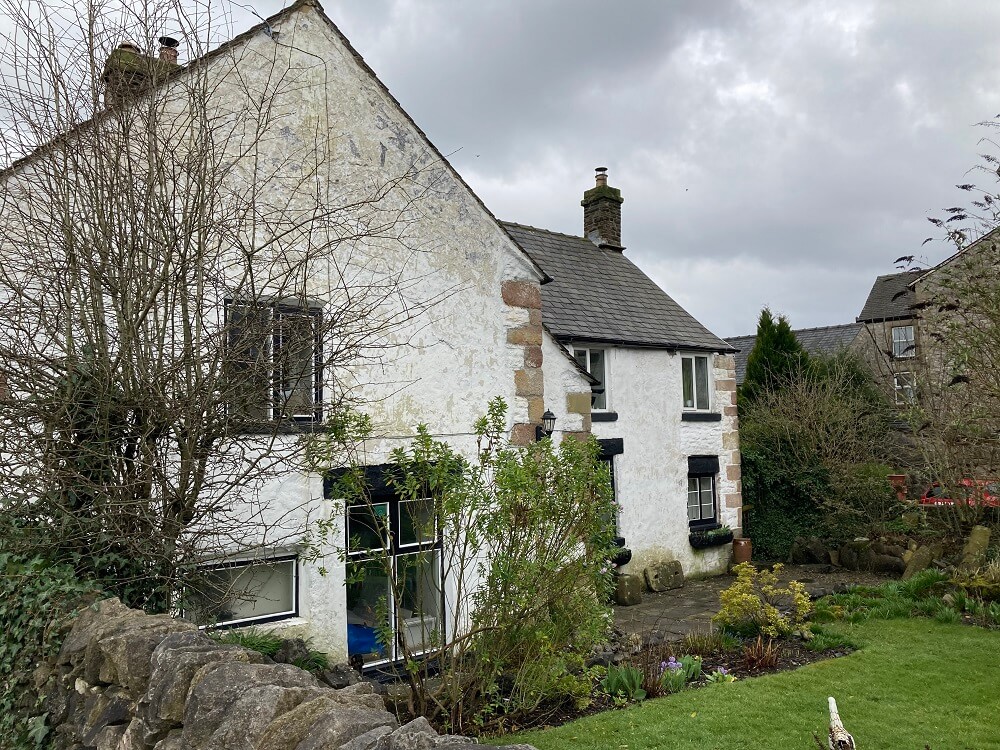
I visited Hawthorn Farm (pictured below right) in Fairfield, Buxton a few weeks ago and was amazed to discover such an old building. It probably dates from around 1590 and was rented and eventually owned by the Smith family for over 500 years. Yes, the same family for all those years, and this got me thinking whether there were other families in the area that could trace their history back for similar lengths of time. The more I looked at the area, the more amazed I became as to how Fairfield has developed.
So let’s begin the story in the reign of King John who died in 1216. There are records showing that there was a mill for grinding corn at that time, probably roughly where Ashwood Park now is, and that certainly means that there was sufficient land being farmed to warrant this. The name Fairfield means exactly that, fair field, especially across the area of the common. The land there is particularly rich, probably because of the volcanic rock and, of course, there was water and springs. This would have attracted the Benedictine monks and Cistercian nuns whose granges, just another word for farms, worked the land. The legacy of this still exists in the name Nunsfield Farm, just off the Common. Lay workers would have been required to help and so a community begins to develop. By 1240, a chapel to meet the spiritual needs of the growing community is built, roughly where St Peter’s now stands.
Hawthorn Farm
Although most of the area was part of the Royal Forest, a hunting ground for the monarchs, the kings were no longer visiting and the forest started to be cleared. The Duchy lands became submerged in the estates of the Dukes of Devonshire so, by the time Hawthorn Farm is built, a great deal of the land in the area was leased to the Duke of Devonshire. This is whom the first Smith family member would have rented his farm from in 1590.
He would certainly not have been alone in the area. He would have had near neighbours at Yhelt Cottage (pictured right). This was built around 1600 and is reputed to contain the stained glass windows from the original Fairfield church when it was remodeled in the 18th century. Maybe the old legend of tunnels from Nunsfield Farm, the church and Hawthorn Farm were established at this time. Were they Catholics meeting secretly to practice their faith?
He would have witnessed the first church being built around 1595.
Yhelt Cottage. Source: British Listed Buildings
The Dakins (immortalised now in the street name Dakin Avenue) would have been near and wealthy neighbours responsible for many acts of charity.
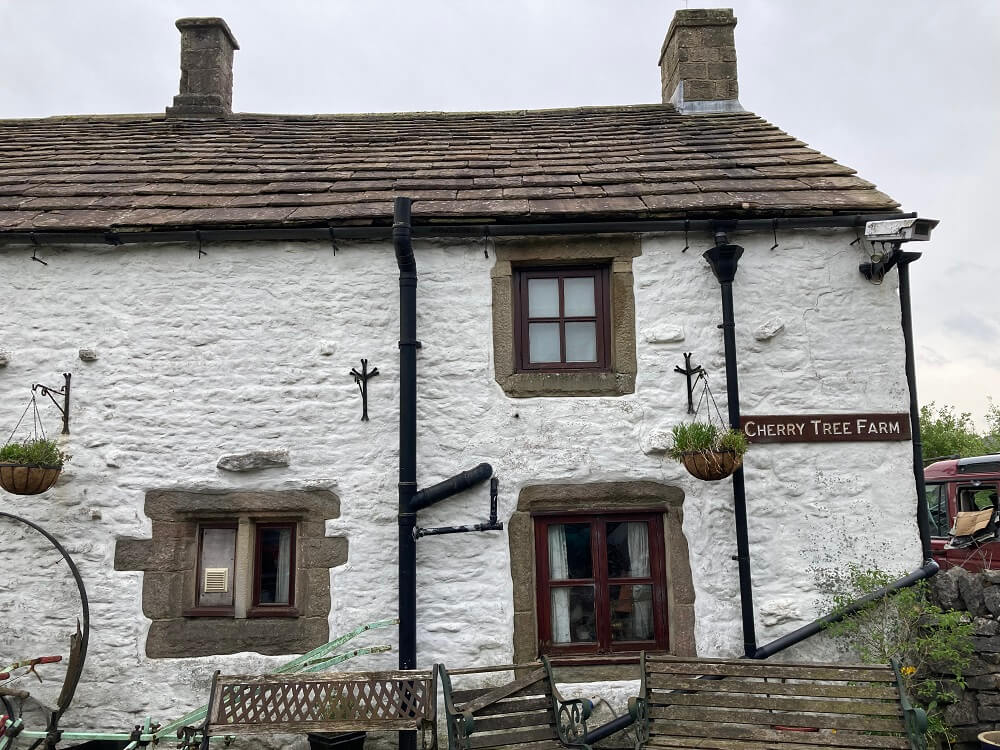
And let’s not forget the Cotterells at Cherry Tree Farm (pictured below left). Whose present owner believes the farm to have been in existence prior to 1500! Moving forward, the resident Smith would have witnessed the Enclosure Act of 1771/2 and the creation of the Barms with forty gates, each of which has grazing rights. Stock, by the way, would have been turned out from 6th April to 31st December. We know that Joshua Cotterell held two gates on the common.
He would have known the Goodwins, who were at Cowlow Farm, around 1740.
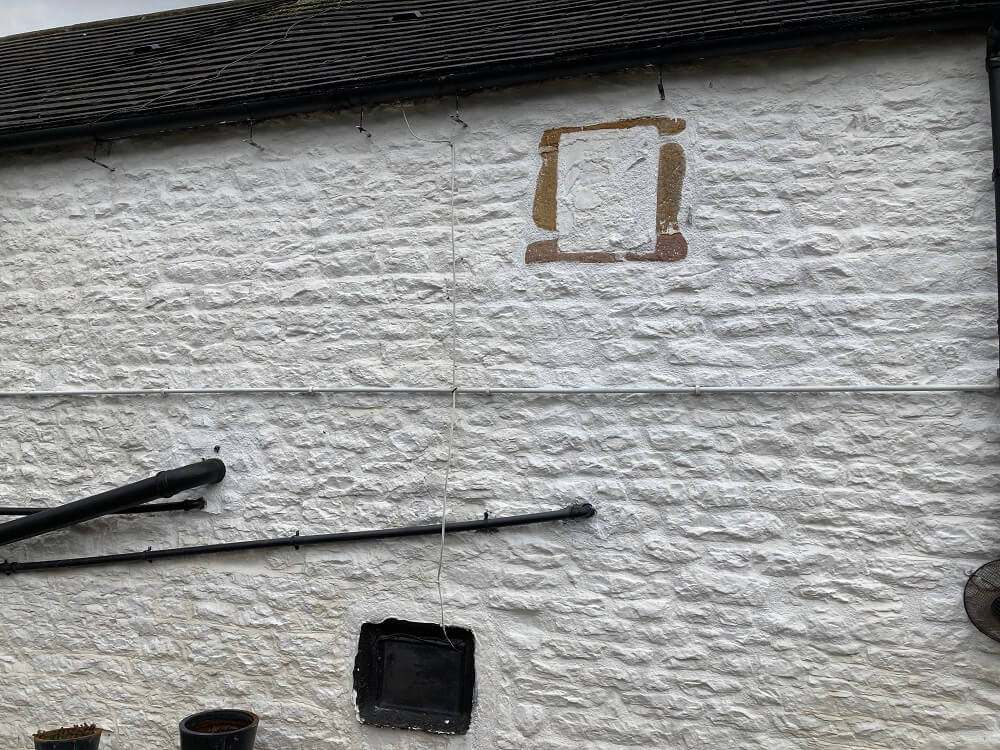
In 1784, the resident Smith would have heard John Wesley preach from a window at Hawthorn Farm (pictured below middle).
Cherry Tree Farm
Is this blocked window the one from which John Wesley preached?
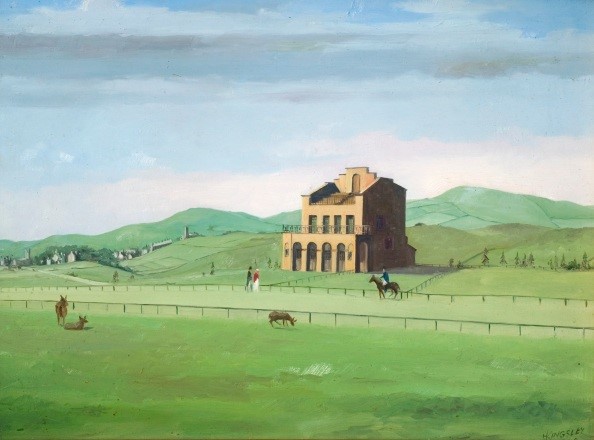
Fairfield Race Course. Source: Buxton Museum & Art Gallery
Did I wonder, a Smith family member have a flutter on the first race meeting on the Common (pictured above right), then called the Barms, on July 25th 1821? And did they subsequently witness the drunken riots of 1823 when the Derbyshire prize fighting champion was laid low by an Irishman, part of a contingent there to witness the horse, Bogtrotter, romp home over the one-mile course?
By 1837, we see the birth of the marvelously named Sawyer Smith, who died in 1910. This would have been the same man whose walls at the farm were washed away on 31st July 1881, when a bywash at the new reservoir in Lightwood burst and the embankment carried into the reservoir.
When Sawyer was born, the new church of St Peter’s was just being built on the site of the earlier church.
Eventually Fairfield became a town in its own right, complete with town council. The township covered the land north of the River Wye, including The Park and Devonshire Park. By 1859, however a boundary change moved them into Buxton town.
In 1905, a large proportion of the Devonshire estate was eventually transferred to the Buxton Corporation. Fairfield, though, was still separate from Buxton and had its own urban district council and a population of approx 4,000. By 1917, it had joined forces with Buxton becoming Buxton Borough Council and taking the population to 17,000.
Now, in 2022, a new roundabout will be built on the A6 at Fairfield, taking some land from Buxton & High Peak Golf Course and cutting across part of the old Roman Road. The road will pass by Cherry Tree Farm, cutting across yet another old road. So, as the digging begins, I hope that people take time to remember, as we start another new chapter in the rich history of Fairfield.
NC
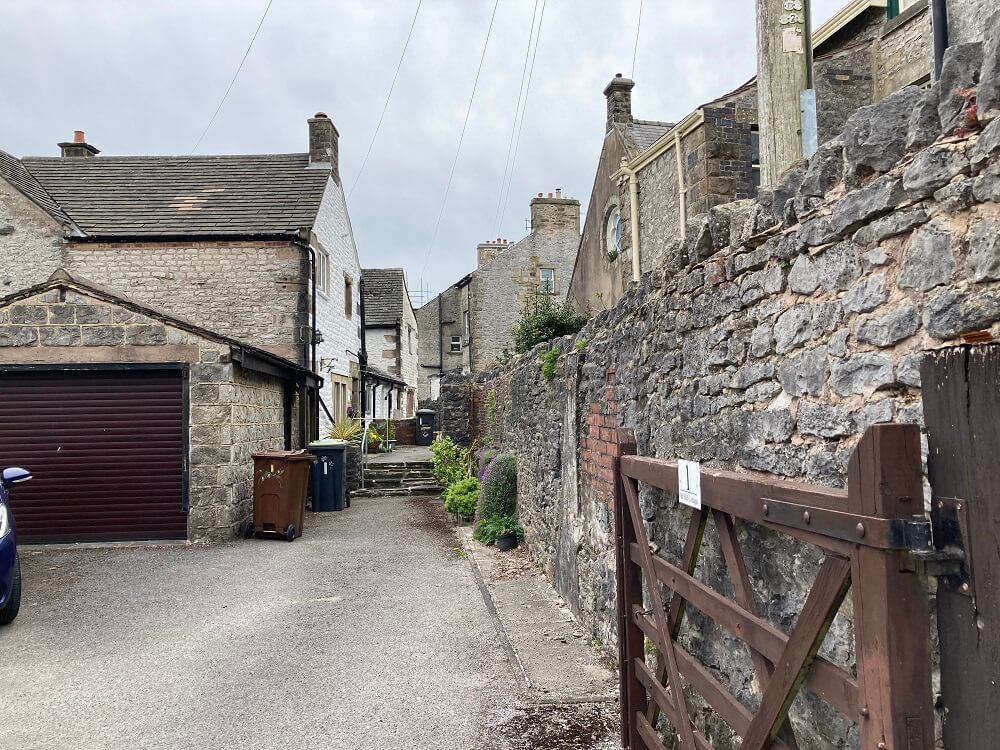
The back of The Front, Waterswallows Road. Did an old road cut through here too?