

Buxton, a Safe Haven in the Hills
Many people consider Buxton an insular place, cut off and removed from the action of the world stage. Indeed, a place referred to by some historians as “sleepy hollow”, it has long been isolated by its geographic position. This is perhaps why, for many during the Second World War, Buxton became a place of safety and it opened its doors and hearts to many refugees and evacuees.
When researching more about these times, I spoke to Judith Usiskin who came here, with her family, from Manchester, and stayed for the duration of the war years. She remembered the town having around 300 Jewish families and two synagogues. Little did I realise that, when I spoke to a group of women in the summer of 2017, that the editor of the Association of Jewish Refugees (AJR) was in the group. In the summer of 2021, I received an email:
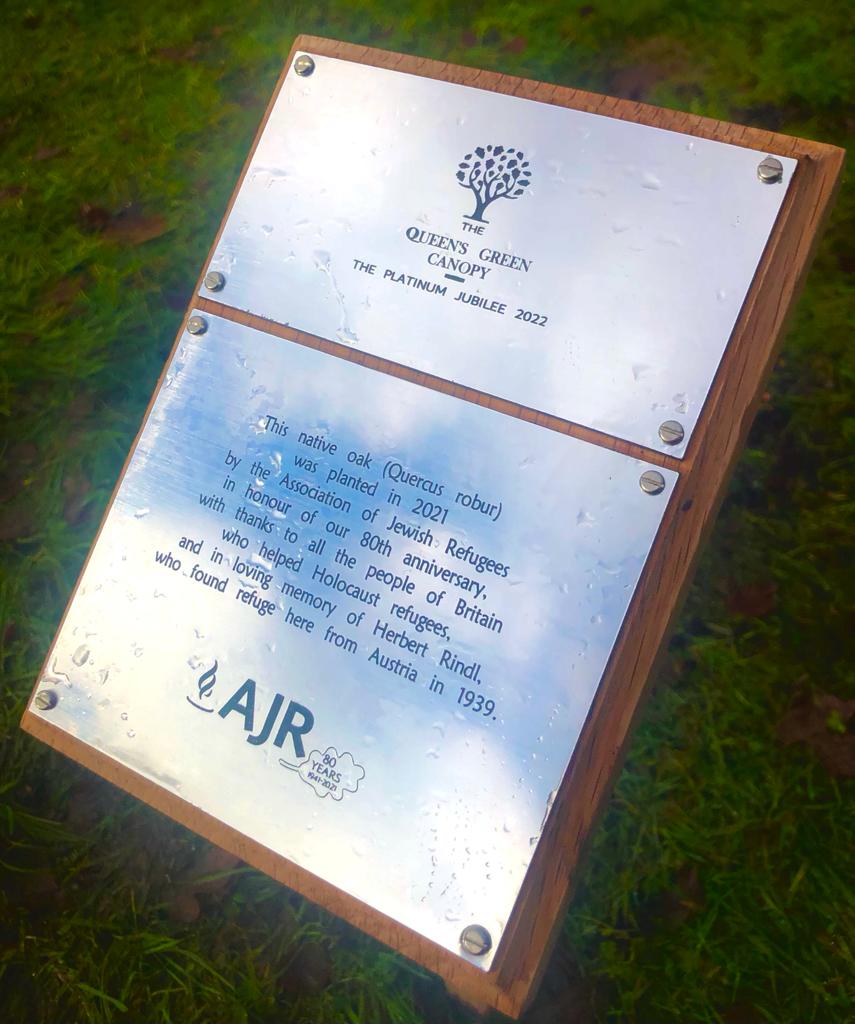
“I’m hoping you will remember me from the very interesting morning that we spent together almost exactly four years ago. I hope you are well. The AJR is celebrating its 80th anniversary later this year and I would very much like to include Buxton in a special commemorative project we are planning nationwide. Very simply, we will be planting 80 native oak trees throughout the UK and are looking for suitable locations with a connection to Jewish refugees. “
And that is how, on 1st December, I was delighted to witness the planting of one of those trees in the Serpentine Walks in Buxton.
The tree was sponsored by the Rindl family whose father, Herbert, had arrived in the UK on the last train of the Kindertransport. Although he was not evacuated to Buxton, he came here often during his lifetime as his wife had relatives here and his three children had very fond memories of the place. I contacted the family and they agreed to come and talk about their father and explain the importance of the home he was given in the UK. I also contacted the family of Herbert Eisner whose family had realised that, if there was any chance of survival, they had to get out of Germany. They sent their son, also named Herbert, from Berlin as a boarder to Buxton College in 1936. He also never forgot Buxton and returned here in 1951, bringing up his four children and becoming the director of the safety in mines research here in the town. Find out more about Herbert in his obituary here. His son, David, talked movingly about the home his father was given here in the UK.
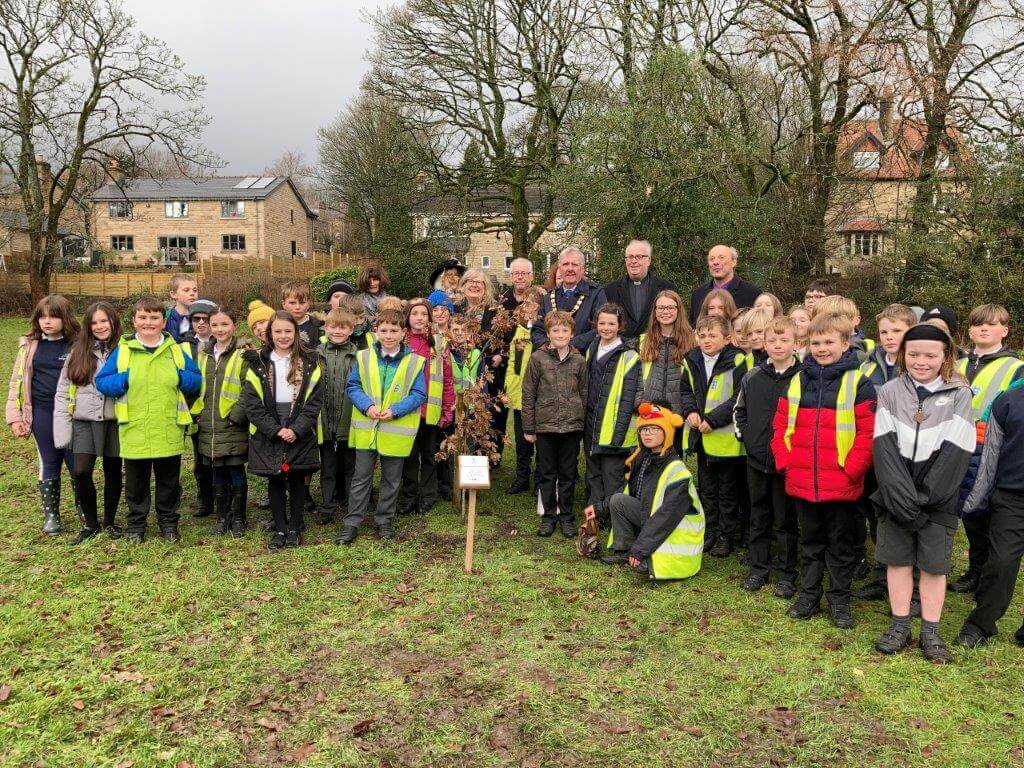
It was also moving to have some of the children from Burbage Primary School join us, as they had been working with Discover Buxton to understand more about the world wars in Buxton. One of the young girls spoke to say that, as a nine year old, she couldn’t believe what it must have felt like for these child refugees to come alone to a new country without family support and unable to speak the language. Their teacher said “It helped them to realise that the local stories we have been discovering are related to ‘real’ people. When we returned to school, one of the children remarked that Herbert’s children would not have been stood there, had it not been for the efforts of the Kindertransport movement “
It is often said that our past teaches us lessons for today and none as poignant that, less than 80 years ago, our town welcomed child refugees to a safe haven in the hills and that the UK opened its hearts to the plight of others.
To hear more about Buxton as a safe haven, watch a video of the talk I gave to the BCA here.
To find out more about the 80 trees planted by the AJR, watch the following video.
NC