
We recently welcomed Carol to the Discover Buxton team who has been a freelance Blue Badge tour guide since 2013, having first qualified here in Derbyshire in 1992. She has managed tours all over the U.K. from the Isles of Scilly to Orkney, Buckingham Palace to Chatsworth House. She has however spent a great deal of time in London and particularly likes to show the links between Buxton and the capital city.
This is a piece she has recently written explaining that connection.

Firstly, an introduction to William Cavendish, 5th Duke of Devonshire (1748-1811). This is a new bronze 7’6” high statue, designed by sculptor Denise Dutton of the local landowner and man who bankrolled the transformation of Buxton in the 18th Century. It is part of the multi-million pound re-development of Buxton’s famous Crescent, which saw its long and eagerly awaited completion this summer inbetween lockdowns.
The campaign to commemorate the life of the Duke, whose descendants still live at the Devonshire’s country estate at Chatsworth House near Bakewell, was spearheaded by local couple Bob and Sheila Barratt. The bronze figure depicts the Duke in everyday business clothes, at a time in his life when he was busy redesigning Buxton, where he owned a lot of land, with the aim to put the town on the map as a fashionable and elegant Georgian spa and rival other well-known spa destinations, particularly Bath. His statue stands by the centrepiece of his plan – the Crescent, designed by John Carr of York and completed in 1789. Next, allow me to introduce a very elegant lady.
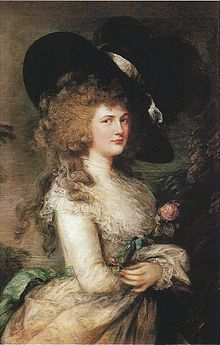
Georgiana, 5th Duchess of Devonshire, born Georgiana Spencer in 1757 at Althorp in Northamptonshire. The couple were married in 1774 and their nuptials were billed as the top society wedding of the year. So much so, that the bride’s mother, Countess Spencer, was fearful that the Church in Wimbledon, where the wedding service was to take place, would be besieged by over-eager gatecrashers keen to see the bride and groom and invited celebrities of the day!
Sadly, the Duke and Duchess proved to be ill-matched. The Duke, several years older than the Duchess, was said to be taciturn, cold, aloof and indifferent to his beautiful young wife. The Duchess, in contrast, was vivacious, gregarious, politically aware, hugely popular and something of a style icon. As a trend setter, she was the first to sport a towering, three foot high hairdo. This infamously impractical hairstyle once also carried a model of a ship in full sail! Many comparisons have been drawn between Georgiana and her world famous 20th century Spencer descendant, Diana, Princess of Wales. The marriage appears to have been unconventional, unhappy, tumultuous and the subject of much gossip and scandal. The couple divided their time largely between their two main residences, Chatsworth House in Derbyshire and Devonshire House on Piccadilly in London.


With no railway or motorway, travel between the two houses involved a three-day tortuous journey by horse and carriage. The Duke and Duchess of Devonshire, due to their position as leading members of the British aristocracy, were also the undisputed movers and shakers of Georgian high society and an invitation to one of their glittery gatherings at the palatial Devonshire House was the hottest ticket in town.
While her indifferent husband lived the life of a leading aristocrat and political figure of the era, frequenting exclusive establishments such as Brooks’s and White’s Gentlemen’s Clubs on nearby St James’s Street, the Duchess occupied her time as a political activist, campaigning for the Whig Party, which was extremely rare for a woman at that time. She also redesigned the gardens at Chiswick House by the River Thames in West London, wrote prolifically and generally cemented her reputation as the ‘Hostess with the Mostest’.
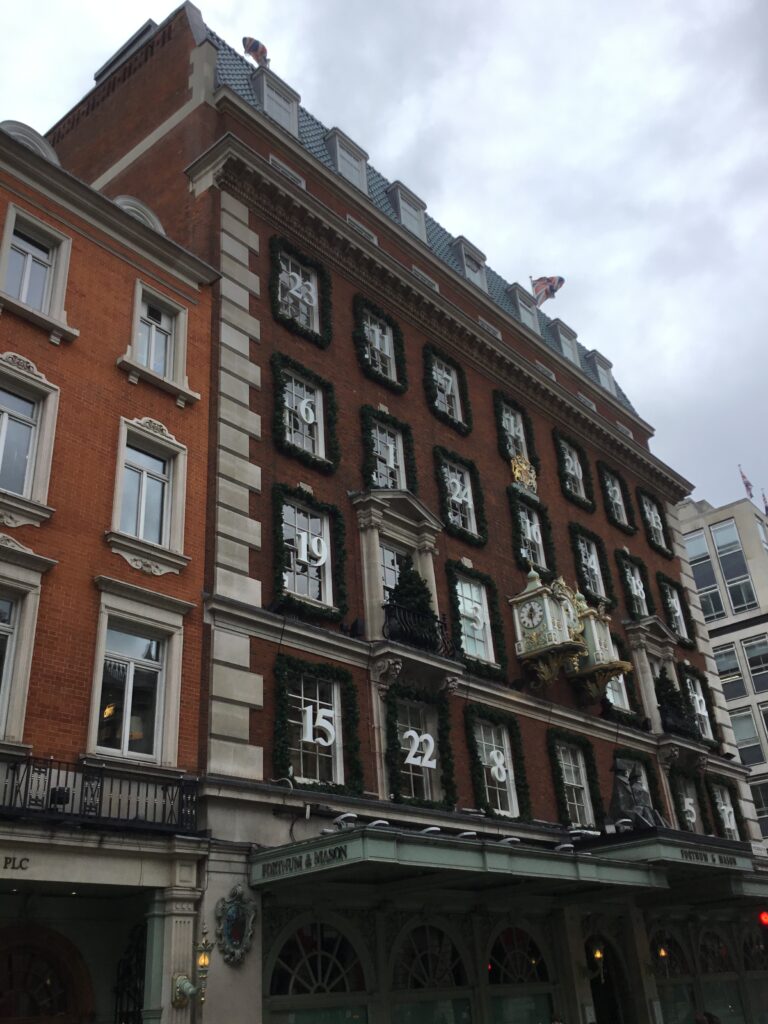
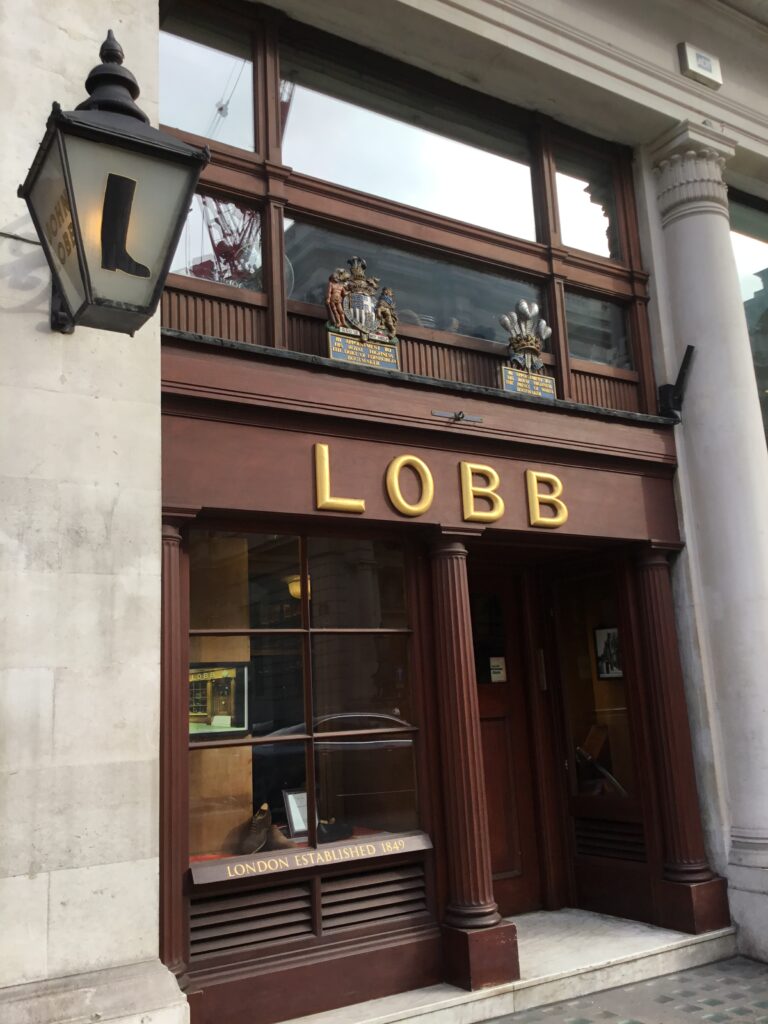
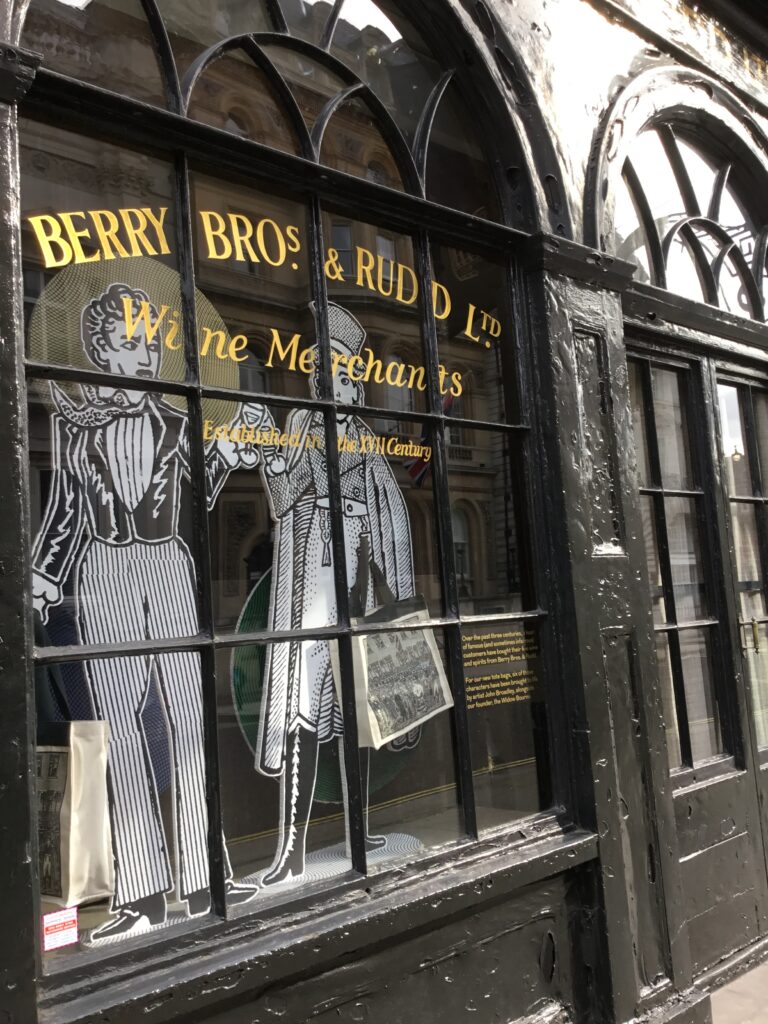
Thus, the Devonshire House Set was born! So, next, dear readers, I want you to picture the scene – it’s around 1780, it’s a late autumn evening on Piccadilly, a bustling and very fashionable main thoroughfare in the heart of Mayfair in Central London’s West End, known then as the ‘Polite End’. Close by are St James’s and Jermyn Streets, where high society shop at fashionable outlets such as Fortnum & Mason (established in 1705 by a footman in the employ of Queen Anne and where the Scotch Egg was invented in 1738), boot makers Lobb, hat makers Locke & Co and wine merchants Berry Brothers & Rudd. Incredibly, you can find and visit some of the businesses frequented by the Duke and Duchess along St James’s Street today.

Carriages are arriving at Devonshire House, unloading their celebrity occupants who were known as “The Fashionables”. Onlookers might recognise the Prince of Wales or leading Whig politician Charles James Fox, or perhaps spot Horace Walpole or other figures from the world of politics or the arts. At such soirées, which generally did not start until around 11pm and continued until dawn, guests would be royally entertained in what were generally acknowledged to be the most opulent ducal apartments in London. Over 1,000 guests at a time would quaff the very finest of culinary fare and fortunes would be won and lost at the many card tables set up for one of Georgiana’s favourite pastimes – gambling. The Duchesses’ gambling habit and the resulting losses and debts proved to be the cause of the Devonshire’s marital strife.
Sadly, Georgiana died in 1806, aged 48, and was buried in Derby Cathedral. Her widower, the Duke, then married Lady Elizabeth Forster with whom he and Georgiana had established an open ‘Ménage a Trois’ since meeting in Bath in 1782. The Duke died in 1811 and was buried alongside Georgiana.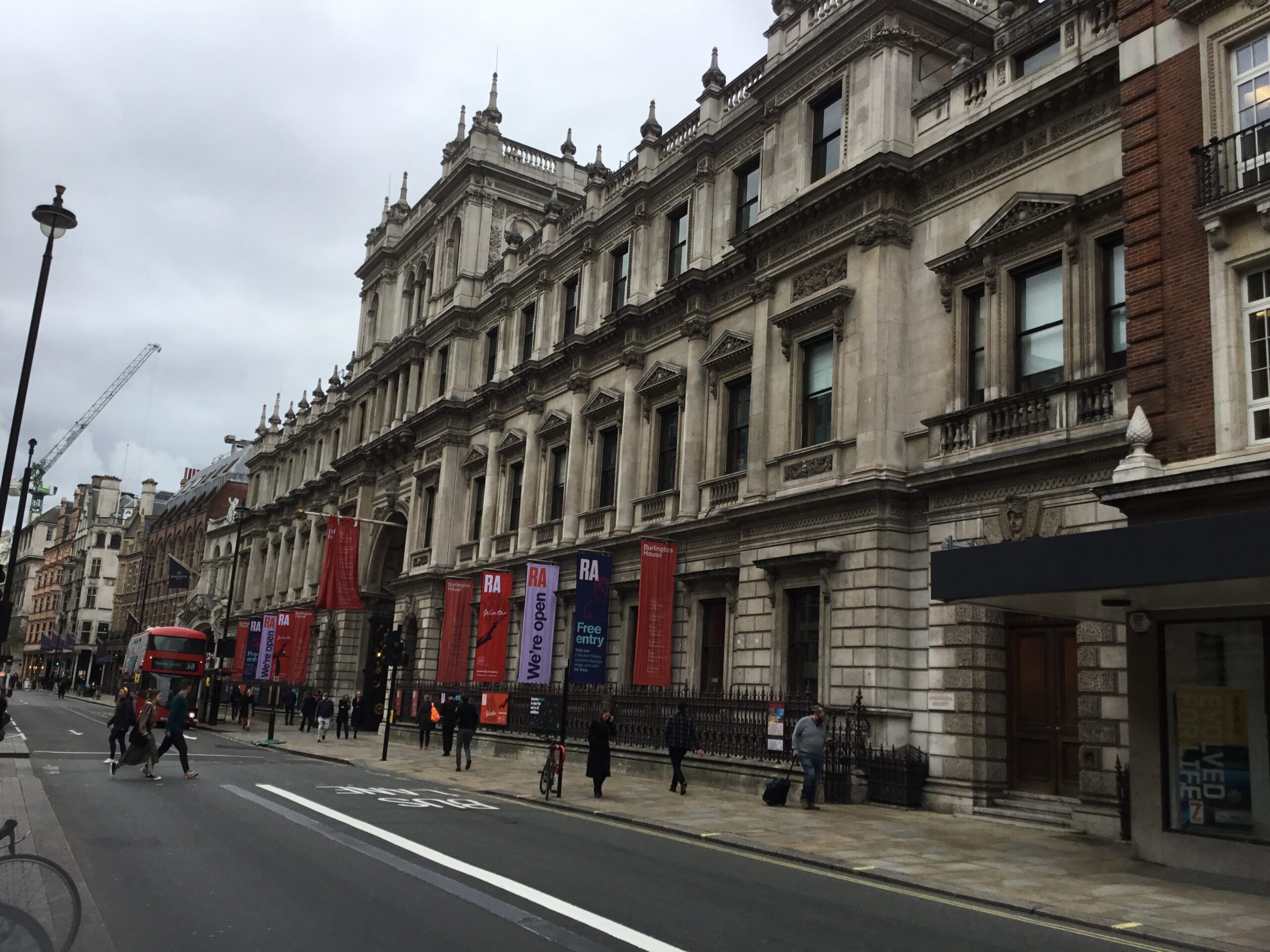
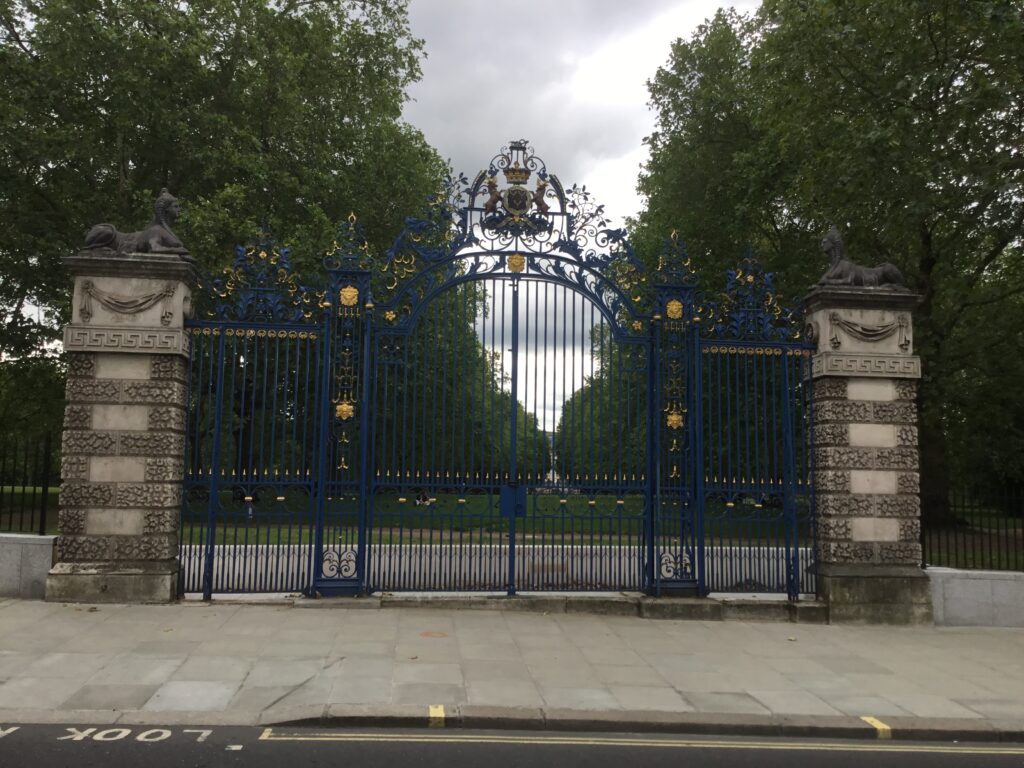
So, what can a visitor to London see today of the area frequented by the Devonshire House Set? Devonshire House itself was eventually demolished in 1924. The Devonshire gates remain, although they have been moved to the opposite side of Piccadilly to form a grand entrance to Green Park. Nearby in St James’ & Jermyn Streets the atmosphere of Georgian London remains. The Burlington Arcade was opened in 1819 and together with what is now the Royal Academy occupies the site of Burlington House, another Cavendish mansion. Opposite, the Piccadilly Arcade runs between Piccadilly and the statue of the Georgian celebrity, Beau Brummell , on Jermyn Street. Today, the roar of traffic is all pervading – even in lockdown – but the legacy and exclusivity of the coterie created by the 5th Duke and Duchess of Devonshire if you know where to look.