
Philosophical musing from Derbyshire
Enlightenment, Romanticism and Jane Austen
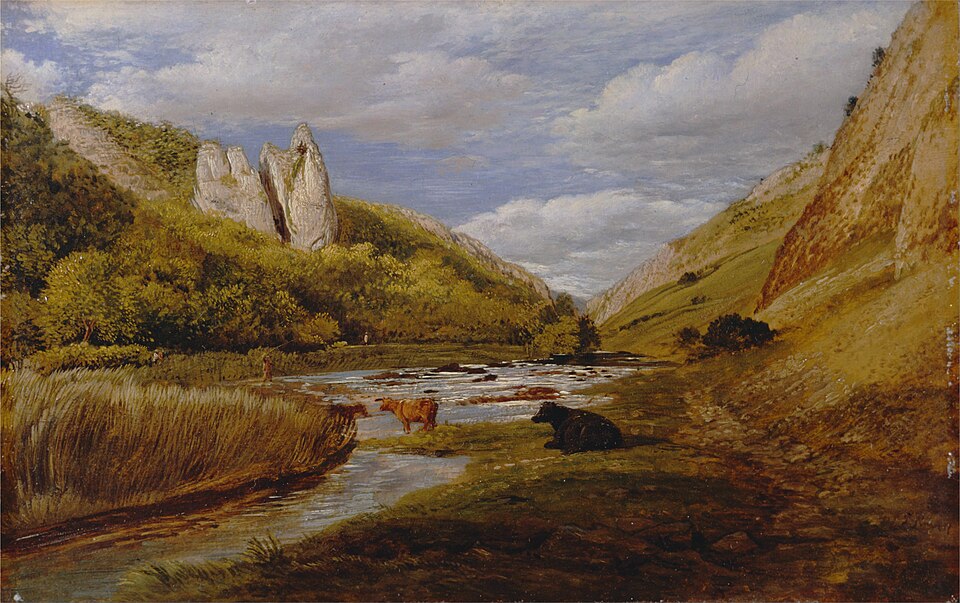
Derbyshire holds many secrets and Jane Austen, whose 250th celebrations are eliciting much interest, referred to it as the finest county in England. Her visit to the county in 1811 was less than 50 years after the famous French philosopher Jean Jaques Rousseau lived and wrote in the village of Wootton on the Staffordshire/Derbyshire border. His time in Derbyshire, much like hers, involved long walks through Dovedale to Ilam and also to Ashbourne, as well as spending time with many of the leading thinkers of the day.
Indeed, whilst Austen was visiting the county, there was still local talk of the mysterious “Ross Hall”, and his visit here had a profound and lasting effect. It added fuel to the beginning of a ‘Midland Enlightenment’ in which radical politics added “feeling “to the rational and scientific knowledge base.
Although Rousseau did not attend the meetings of a group of intellectuals and industrialists, known as the Lunar society who met in the Birmingham area, including Lichfield, to discuss scientific and philosophical ideas, he did interact with them. Erasmus Darwin’s home, the co-founder of the society, was in Lichfield and other prominent members included Joseph Priestley, Josiah Wedgwood and James Watt. Anna Seward, also from Lichfield, was an informal member.
The peaks and dales of Derbyshire gave them a wonderful canvas to practice their emotional connections with self. This Enlightenment was occurring at the same time as Austen, aged 21, was drafting her first novel, Sense and Sensibility, c.1795, just three years after Mary Wollstonecraft wrote her A Vindication of the Rights of Women (1792).
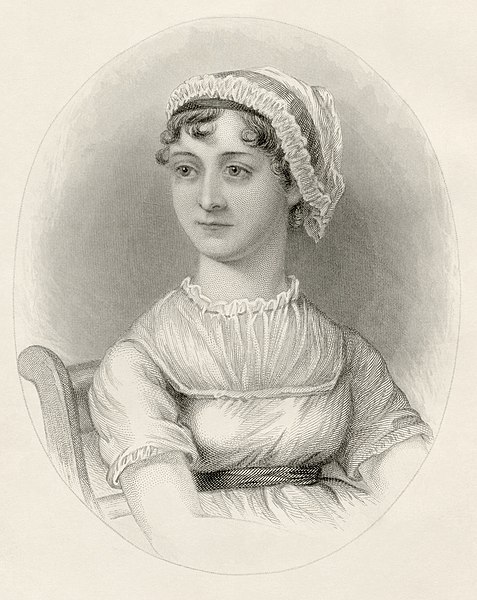
It is likely that Austen would have been aware of these esoteric happenings and absorbing them into her writings. Initially, therefore, it is difficult to comprehend how Austen, who had also lived through the French revolution with all its political fallout, appears to be, in modern interpretations, concerned with the daily doings of life, rather than the philosophising of men and the attempt by Wollstonecraft to challenge their position. Arguably, it is exactly this which makes Austen’s work radical. It is the close observation of the social mores of the day that acknowledges Rousseau’s sensibility, or propensity for feeling, whilst forcing the reader to recognize both the position of women and the way they felt and were made to feel. Austen, despite recognising that it was “a truth universally acknowledged” did not marry and lived an independent life.
Rousseau’s position on church matters was also a far cry from the country parsonage inhabited by Jane Austen and her family. Nature was the enlightened man’s new church and it was through pensive walks in rural settings, and the embracing of the rural way of life, that we would know and understand ourselves. We can assume though, as a bright intelligent man, who cared deeply for his daughters, that the Reverend Austen, Jane’s father, would have understood the feeling that nature could inspire. Perhaps though not in the way Joseph Wright, the famous Derbyshire painter, was celebrating the philosophy of the Enlightenment in his portrayal of men, such as Brooke Boothby, another of the Lichfield circle. Boothby is painted as a “man of feeling,” no longer stiff and upright but laid on his side and, rather than holding a copy of the Bible, as he once might have done to signify his standing, holding a copy of a book by Rousseau.
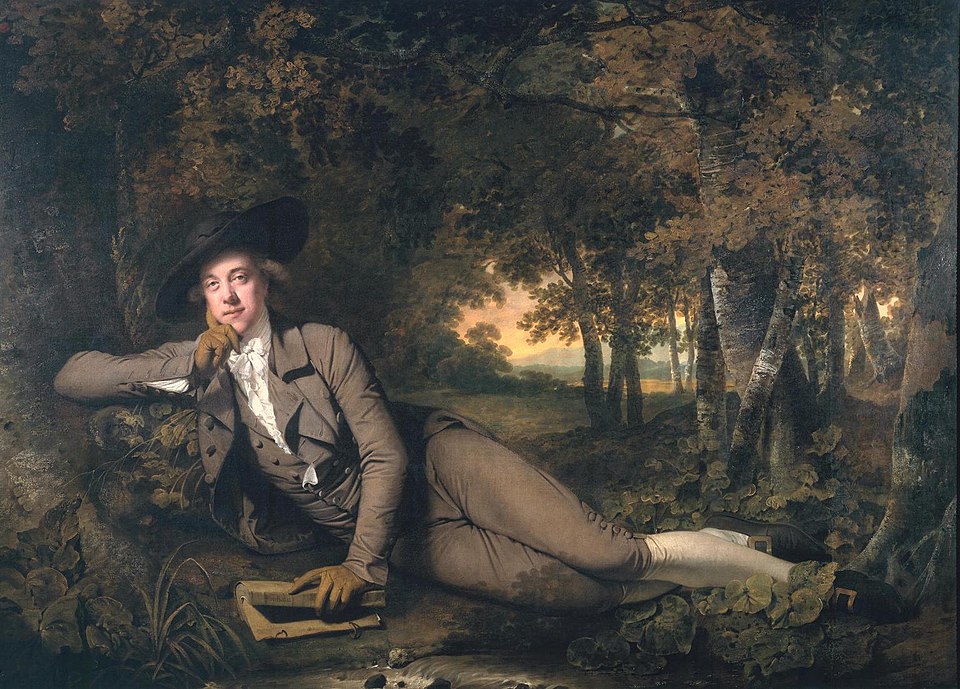
It is as if Boothby holds a new gospel, a road map for those enlightened enough to move away from the confines of the conventional church to a simpler understanding of the purpose of life through the awe of natural surroundings. Wright, of course, was an important Derbyshire painter who captured and softened the likes of industrialists, such as Arkwright in Cromford. Arkwright, however, may well have required this marketing makeover, as his embrace of feeling did not extend to moral matters. His treatment of the child apprentices at Litton Mill bear testament to this.
When Austen is romanticized and treated in a frothy manner, similar to women’s Regency dresses, which seem light and insubstantial, we entirely miss the point. Austen’s works are satirical, clever, bitter even, demonstrating the repressive conditions that women of a certain class were forced to endure if they were to have any power. As women through the generations have experienced, they carry out the practical doings of the ways of seeing and being that are imposed on them by the dominant narrative of the time.
We will be telling the story of Buxton during Austen’s time with our character-led performances in the Buxton Georgian Festival in September. If you can’t wait until then, there are performances during the Buxton International Festival in July, or you can book us for a group tour yourself – see our character-led tours here.
NC
Cover image: ‘In Dovedale’ by John Linnell c.1814. Image source: Wikimedia Commons