
Park Road, the Henriques and New Year Treats
Recently, we have been working on something we are calling a ‘Winter Warmer’, which will take place at a house on Park Road in Buxton on selected Saturdays in January and February. The house has recently been restored to its original Victorian splendour and will provide a fabulous setting for our immersive Victorian heritage experience.
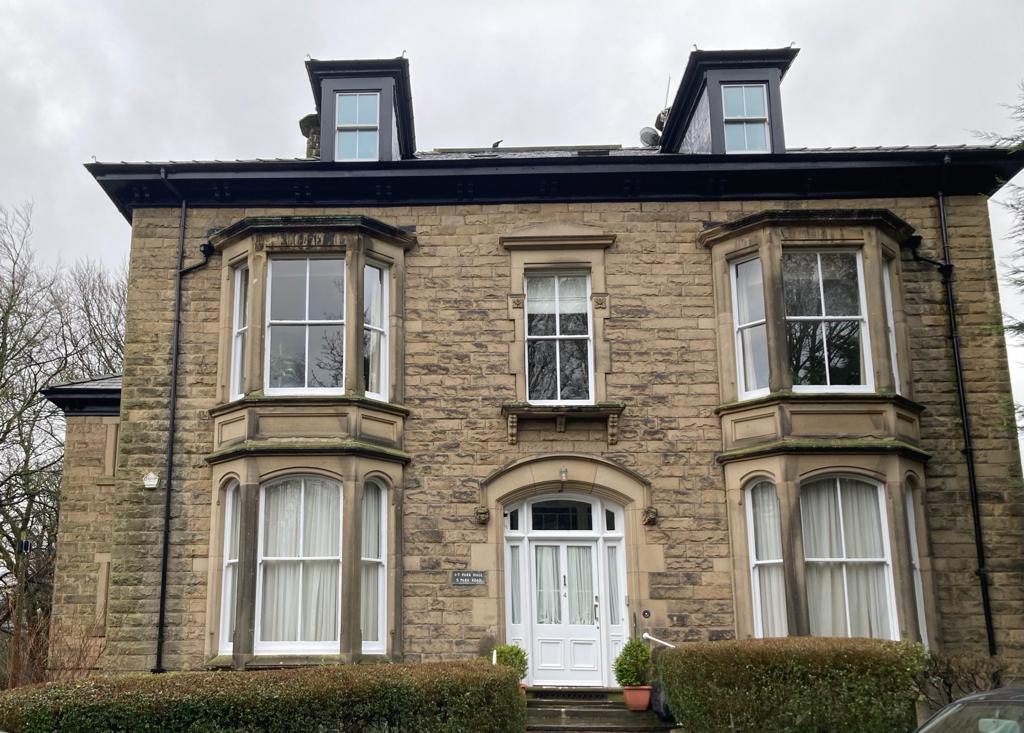
We have been busy researching and writing the script for these events which will take the form of a conversation between Dr Robertson and his housekeeper, Agnes. For a while, I mistakenly thought that the house we will use for the experience was the same one that the marvellous Charles Kitchen, of Fairfield Band fame, had told me about in one of our podcasts (listen here about 20 minutes in). This was not the case, however, and the house he was referring to was the home of the Henriques, Park Hall, as it then was, now 5 Park Road (pictured).
This is the story.
Georges Henriques was a very wealthy man and Manchester stockbroker. He was a former international golfer and president of the English Golf Union in 1951. He, played for England, and was heavily involved with the English Golf Union and seven times Derbyshire champion. He was also a member of the Buxton & High Peak Golf Club and their website recalls a story which, with their permission, I have used below.
“He was a challenging character with his own set of rules and values. For example, Harold Wooliscroft (Club Professional) had a phone call and came up to the bar to tell Mr Henriques that he had a call. Having been advised that he lost £50k in the stock market crash of 1929, Mr Henriques main reaction was that the Pro should not be in the bar so had him dismissed!”
Now, £50,000 in 1929 would be worth around £2,618,107 in today’s money, so I suspect that he truly was a rather challenging character.
The story Charles Kitchen recalls is playing with Fairfield Band on Christmas Day morning on Park Road. Many of the big houses would invite them in to play. They would stop at the house of the Henriques and Mrs Henriques would throw money down from an upstairs window. Any money that fell into the instruments was considered a personal tip and any that fell on the floor went towards the club funds!! I can just imagine the scramble from band members.
Sadly, the Henriques’ son, George, had died in the Second World War. He was in the British Expeditionary Force, under the Colours of the Sherwood Foresters and was captured and shot near Oignies in France. Buxton and Oignies have a profound historical link forged during some of the darkest days of the Second World War, in May 1940, and we have been officially twinned with Oignies since the late 1960s. Here is the story, as published on the ‘Friends of Oignies’ twinning website:
“The remains of 18 English soldiers, 6 of whom were from Buxton and served with the Sherwood Foresters, are interred in the cemetery at Oignies. These soldiers died in action, excepting one of the Buxton lads who survived the war but wished to be buried alongside his comrades after his death. The Foresters’ Regiment was fighting to hold back the advancing German army, which allowed more time for the evacuation of British troops from the Dunkirk Beaches.
Between 25th and 27th May 1940, British, French and Moroccan troops held out against the advancing German army at key canal crossings at Oignies. A crucial 72 hours afforded time for the Allies to fall back to Dunkirk. The French lost 35 and the British 18 on the field of battle.
On 28th May 1940, after sustaining heavy losses German troops entered Oignies, As the SS advanced, they picked up civilian refugees and used them as a human shield to prevent the French soldiers from shooting on the advancing enemy. The Germans burned 380 houses and shot 80 citizens in revenge for the resistance.
After the war, on 13th July 1947, Oignies became the first ‘Ville Martyr’ (Martyred Town) when French President Vincent Auriol visited Oignies, along with future President François Mitterrand. During the visit a mausoleum was unveiled, in memory of the May 28th tragedy.”
Mrs Henriques never recovered from the loss of her son and Mr Henriques paid an allowance to the French woman who cleaned and cared for his son’s body until the end of the war.
NC