Here at Discover Buxton, we like to explore the surrounding area and also the wider Peak District; particularly its relationship with Buxton. So, here’s a little about Longnor…
A mere 6.5 miles from Buxton, the village of Longnor has an amazing history. We are able to provide a very special tour here so let me tell you a little to whet the appetite. The place has been notorious for its many inns for generations but, of course, they were built to cater for the needs of the market visitors and the number of people travelling through along the pack routes.
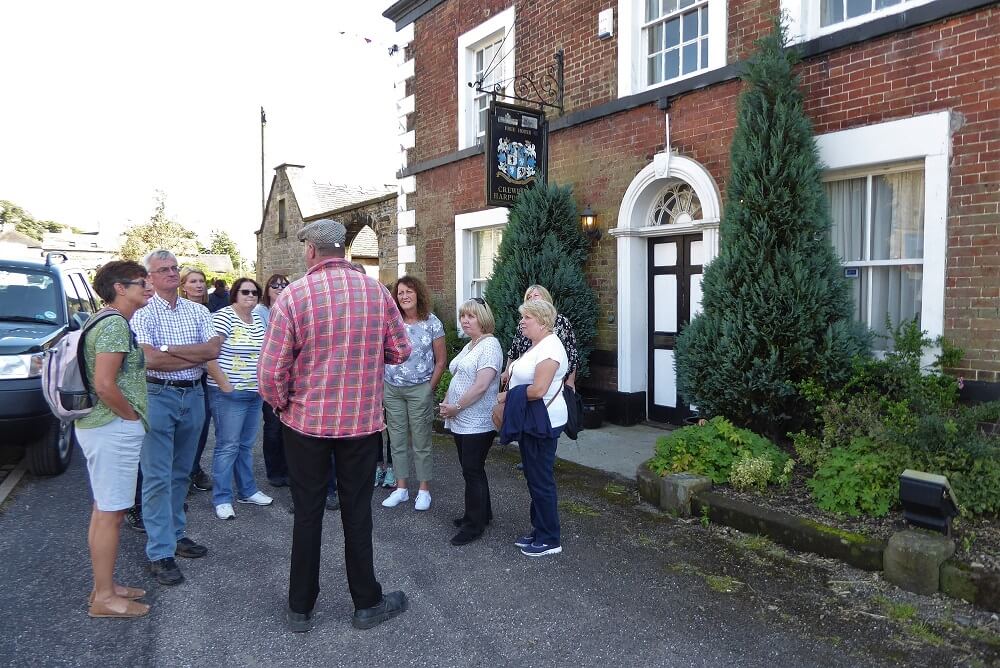
The Crewe & Harpur Arms, which is a prominent inn in the town, was a coaching inn on a route between London and Buxton in 1803. In addition to the Crewe & Harpur Arms and the White Horse, there were a further five inns!! In 1818, these were: the Bell, Red Bull, Cheshire Cheese, Horse Shoe and Swan. In 1850, there was an inn on the north side of the market place called the Board and the Butcher’s Arms in 1860, which became the Grapes c.1866.
Discover Buxton tour group outside the Crewe & Harpur Arms, Longnor
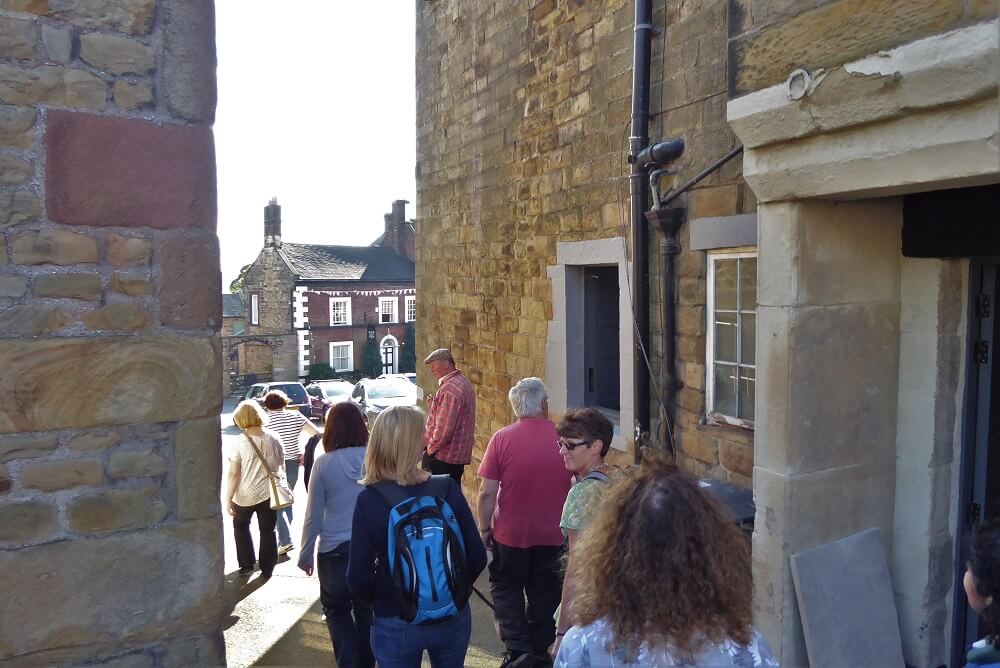
View through to the Crewe & Harpur Arms, Longnor
You might wonder what the Crewe & Harpur pub is doing with a name like that: well this is a very important family here and a very important one to the area. The Harpur Crewe family, who became lords of Longnor Manor in the 15th Century, began a long-standing association with the village.
Dairy farming was important to the area, as suggested by the fields known as Chesford in the 13th Century. Cheese was made at Reapsmoor and Glutton and taken, amongst many places, to Buxton who also have a Cheshire Cheese Inn situated, to use its old name, on Cheese Hill!
There are family names in the area that stretch back many centuries: Bestwicks, Hollingsclough, Mortram, Slack, Nadins and the Wards. I suspect many of their ancestors would have been around In the second half of the 7th Century when it was referred to as ‘a heathen place, filled with heathen darkness of the blackest kind’ according to some of the research carried out by historians.
When the Domesday Book was compiled, there was still no specific mention of Longnor, as there is no mention of Buxton, but the area was not forgotten by the conqueror. The wild and wooded area and hills that made up this area needed his presence to subdue the residents.
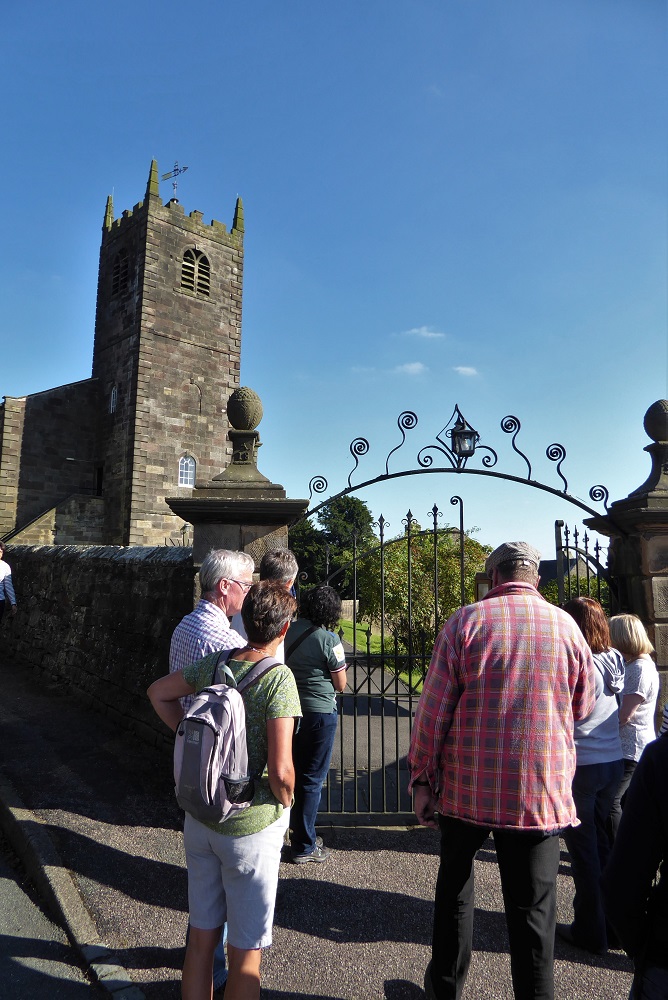
There’s a good story about how some Longnor men were caught poaching deer in Leek Forest in the day of King William II, who ordered that this little village should be burnt to the ground as a punishment. The church of St Bartholomew’s was built originally to bring the people to God but mainly to help control locals.
Longnor, Long and over, Long and ore, Long Ridge, call it what you will, existed in 1223 and the church, with its early Norman font, one of only two in Staffordshire of such, suggests the same. Longnor, I suspect, had a more organised community in the 1100s than Buxton.
Why not book tours with us into the surrounding area of Buxton and learn more of the rich history of this fascinating area.
NC
Top Image: Longnor. Image Credit: JR Higginson. Image Source: Wikimedia Commons